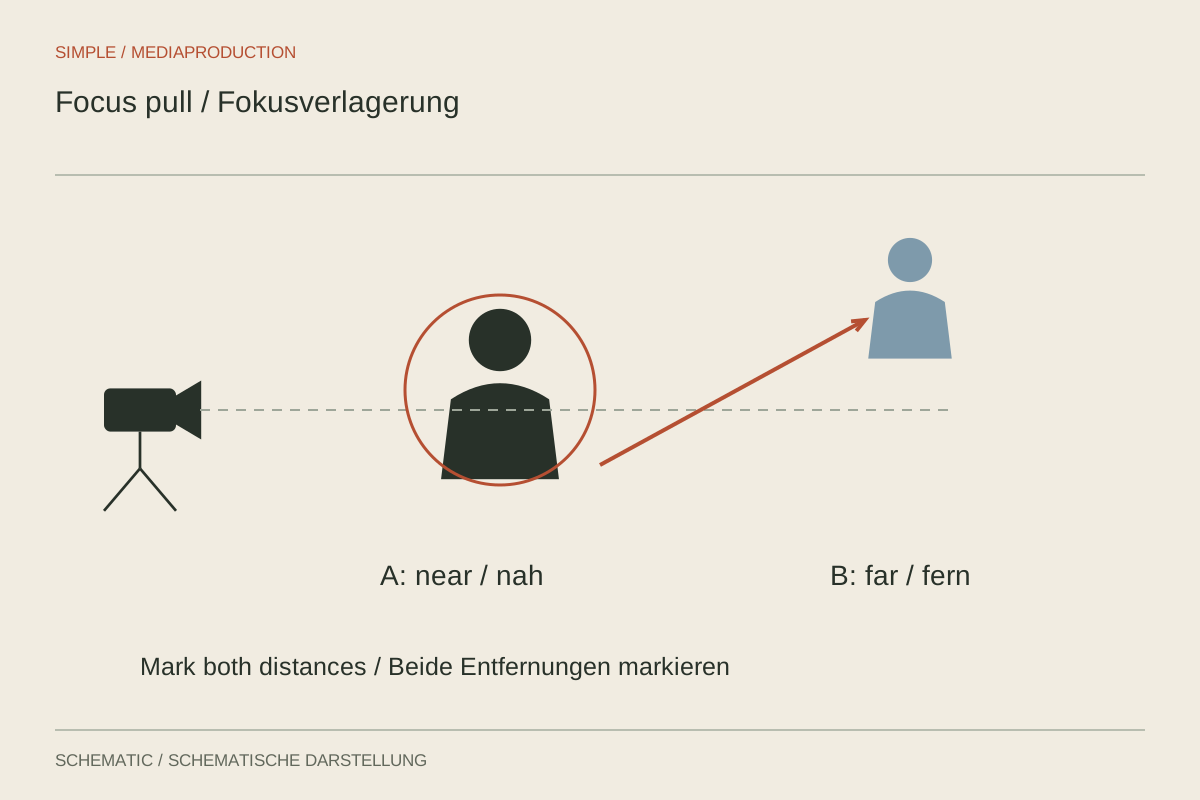
A blurred background becomes sharp while the foreground softens. A focus pull can reveal a relationship or introduce another detail. Without a clear reason, however, it may look like the camera searching unsuccessfully. Decide first what viewers should notice initially and what they should discover next. Subject spacing, aperture and the speed of the transition follow from that purpose.
Establish two dependable endpoints
Place both subjects at their actual positions and choose the composition. Check the first focus point with magnification, then the second. If almost everything remains sharp in both settings, the change may barely register. If only tiny areas are sharp, the move may become unnecessarily fragile. Seek a balance that communicates clearly and can be repeated reliably.
With manual operation, marks on a suitable focus system can help. Some electronic focus rings respond to turning speed or the selected response mode, however. The same rotation may not always correspond to precisely the same distance. Test the particular lens and do not treat a mark alone as proof of sharpness. Focus breathing can also change the composition visibly during the move.
Connect the change to an action
For example, a component lies in the foreground while someone behind it explains its use. Attention starts on the part and shifts to the face as the explanation begins. Rehearse that timing together. If the person speaks for a long time while remaining blurred, the transition may resemble a delayed technical correction rather than an intentional change in attention.
Record a settled moment before and after the movement. This lets the editor show the complete pull or enter at either endpoint. Do not simply repeat the move rapidly; inspect a recorded take. A clean beginning with an uncertain finish does not yet make a usable shot, especially if the important line occurs near the end.
Check automatic transitions
Some cameras allow tapping between subjects with an adjustable transition speed. This can help, but depends on recognition, contrast and obstruction. Verify that the camera actually travels to the intended object and remains there. A technically even speed may also fail to match the rhythm of the action, so judge timing in playback rather than only in the menu.
If the effect complicates the explanation, two separate shots may work better. A focus pull is not a compulsory sign of elaborate production. Use it when the change itself conveys information that a straightforward cut would communicate less clearly, and retain simpler coverage if the transition proves unreliable.