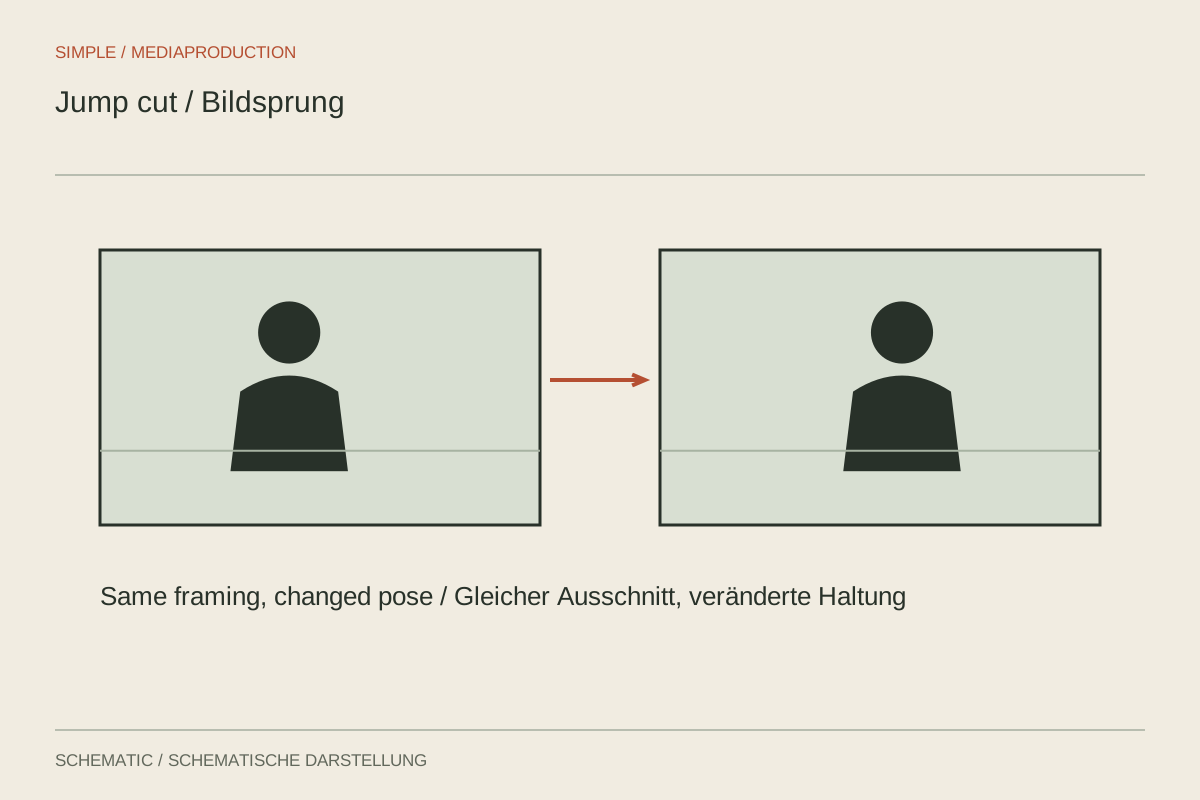
After removing a stumble, the head suddenly occupies a different position while the background remains almost unchanged. This jump cut makes the omitted time visible. It is not inherently an error. It may suit a direct explanation, while distracting more in a calm interview. The solution depends on available material and intended effect.
Check the edit itself first
Listen without pictures. Does the sentence connect naturally and retain its meaning? If speech already sounds rushed or incomplete, covering it with an image change will not solve the underlying problem. Adjust the audio join first, perhaps retaining more pause.
Then examine the visible jump. A tiny change in mouth or eye position can feel stranger than a clearly different shot size. The cut should either openly read as an omission or be bridged meaningfully by another relevant view.
Use existing alternative views
A simultaneously recorded second camera can provide a change if synchronisation, eyeline and visual treatment match. Do not choose an angle merely because it exists. Switching arbitrarily on every sentence can become as restless as numerous jump cuts.
Relevant B-roll can show the object being discussed while the voice continues. Use it only when it belongs to the content. An arbitrary image may hide the head movement yet introduce questions or imply a false connection.
Limit digital crops and transitions
A tighter digital crop can create a more distinct size change if source resolution and delivery requirements permit it. Check sharpness, composition and space for hands or captions. Repeatedly jumping in and out quickly becomes a conspicuous pattern itself.
Morphing transitions can help with suitable static footage, but may visibly distort the face, glasses or background. Inspect every result in motion and frame by frame. If the repair draws more attention than the cut, retain a clear jump or select another passage. An honest visible time jump is often easier to understand than an artificially warped face.