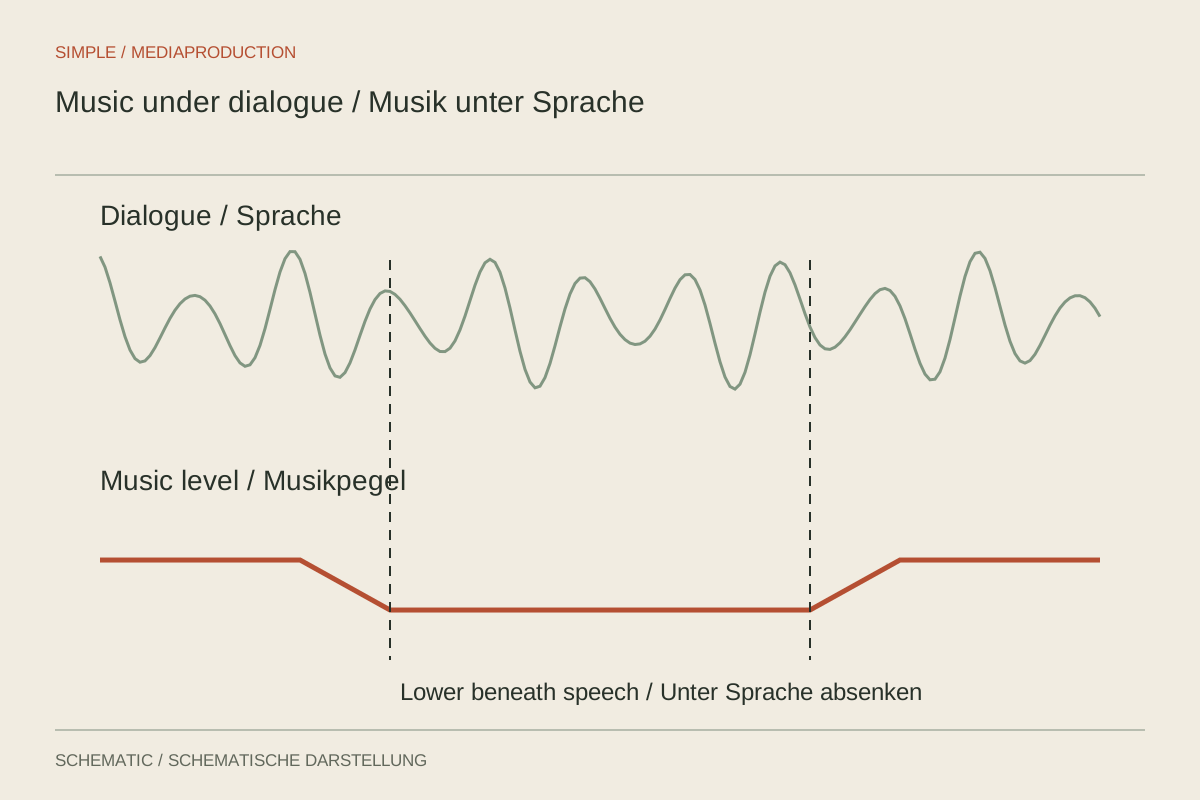
Music can sit comfortably beneath one sentence and hide an important number in the next. A fixed gap between two level meters does not reliably solve this. Voices, instruments and pauses change. The mix therefore needs to follow the actual content rather than a fader position chosen once.
Start with the speech
Listen to the dialogue without music first. Correct conspicuous differences between sentences using clip gain or volume automation. A single quiet word may need its own small adjustment. Do not try to rescue an uneven dialogue track by making the music almost disappear throughout the entire film.
Then introduce the music quietly and raise it only until its intended role becomes apparent. Check soft consonants, numbers, names and quiet sentence endings. If you already know every word, another listener is useful: familiarity makes partially masked speech seem clearer than it really is.
Shape transitions rather than constant pumping
Ease the music down before a new explanation. It can occupy more space during a substantial speaking pause. Short breaths usually do not need their own large rise in level. Otherwise the background sounds as though someone is continuously turning a volume control.
Automatic ducking can create an initial set of level changes. Review those transitions and adapt them to the phrasing afterwards. The feature does not inherently know which pause matters dramatically or which word deserves particular attention. Recheck the automation whenever the edit changes.
When quieter is not enough
A dense song with vocals may compete more strongly with speech than a restrained instrumental track. Consider a different selection or a quieter passage first. Gentle tonal adjustment can help, but cannot replace suitable musical structure. Heavy processing can make the music thin and unnatural.
Listen through a small speaker and at a moderate volume too. The voice should remain understandable without effort. Check a mono mix where relevant to the intended use. A strikingly wide headphone mix can behave quite differently on another playback system.
Finally, compare the film with and without music. If an important statement becomes clearer and more effective without it, leave that passage uncovered. Retain separate dialogue and music tracks as well, so later versions or translations do not have to be constructed from an already mixed file.