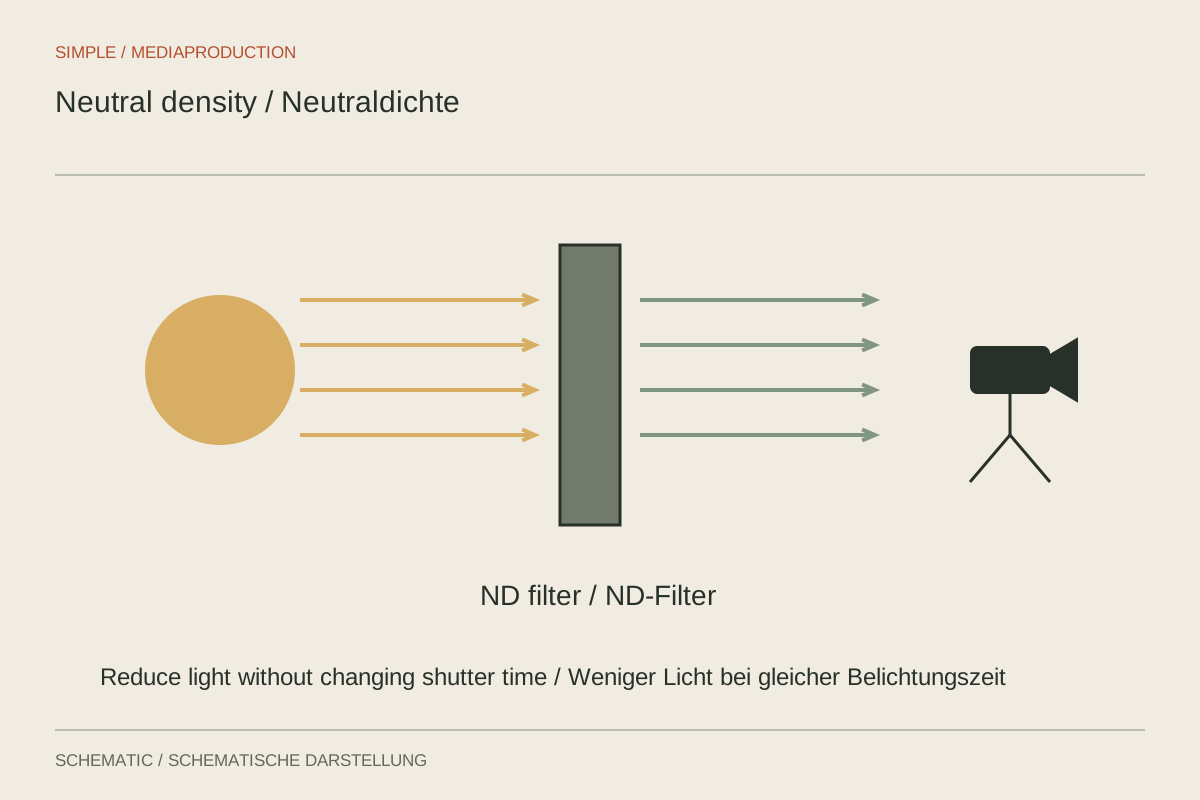
Outdoors, the image remains too bright even at low sensitivity. A faster shutter would darken it but change the appearance of movement. A smaller aperture changes depth of field. A neutral-density filter offers another route: it reduces the light reaching the sensor, allowing the other settings to remain within the setup's practical limits.
Understand the required strength
One stop less light means half the amount. Three stops transmit one eighth of the original light; six transmit one sixty-fourth. Manufacturers use different descriptions, including stops, filter factors and optical density. Do not interchange those numbers. Read the specific filter's rating rather than assuming a similar-looking product label describes the same reduction.
Set the desired shutter duration and aperture first, then assess how much reduction is needed. Check exposure again after fitting the filter. Using ND does not remove the need to measure and inspect the picture. Passing clouds can change the requirement during filming even when the intended motion rendering remains fixed throughout the scene.
Choose fixed or variable deliberately
A fixed ND has one strength. A variable filter changes its effect when rotated and can permit quick adjustment. Its usable range is limited, however. Over-rotation or unsuitable combinations with field of view can create uneven darkening. Respect its stated limits and test both an even surface and the frame edges at the actual settings needed.
Variable filters can also affect reflections and the appearance of certain surfaces. Avoid unnoticed rotation during an important take if it produces visible changes. Test colour and contrast at the required strength too. A neutral reference makes it easier to recognise a colour cast later when comparing filtered and unfiltered recordings under otherwise consistent conditions.
Check mounting and image together
The filter must fit the thread or holder and remain secure. Stacked rings can become visible at wide angles. Inspect the whole composition rather than only the face in the centre. Remove fingerprints and check reflections with side light before starting the recording, particularly when a bright source sits just outside the frame.
If problems remain despite enough density, change the arrangement deliberately. A shaded position, different aperture or suitable fixed filter may be preferable to the maximum rotation of an unsuitable variable filter. Keep a sample clip. The useful solution preserves required brightness, movement rendering and evenness across the image together, rather than solving exposure while introducing another visible fault.