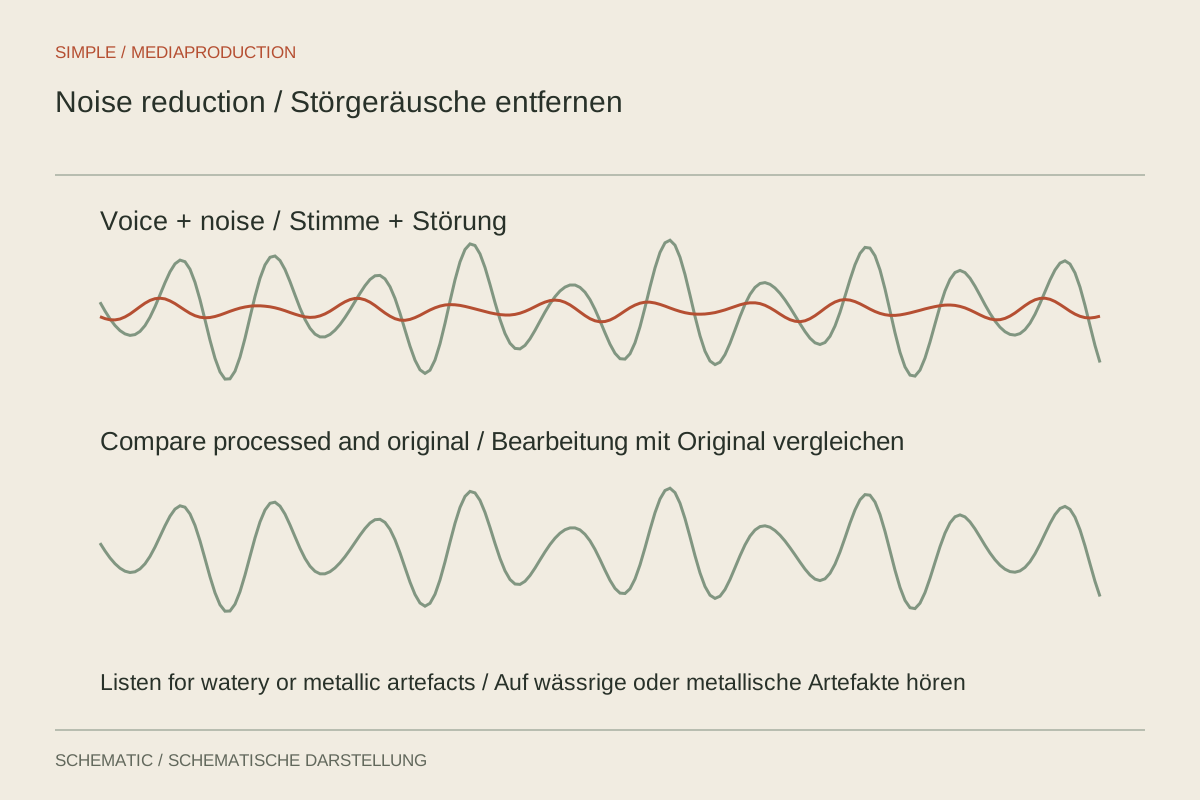
The best noise reduction is not necessarily the version with the quietest pauses. If syllables become metallic or word endings disappear, the film loses more than it gains. Start with a diagnosis: is the problem steady hiss, a single click, hum or changing sounds overlapping the speech?
Choose a suitable treatment
A single click usually does not justify heavy processing across an entire recording. Locate it precisely and consider a local repair or replacement from another take. If it occurs within a word, listen closely afterwards for changes to the voice itself as well as the unwanted sound.
Some tools describe steady background noise using a representative noise-only selection. That selection must not contain speech. An unsuitable noise profile can remove wanted information too. For changing disturbances, one profile may not represent the whole situation adequately.
Work in small increments
Begin with a restrained setting and listen to a sentence with quiet endings. Compare against the original at a similar loudness. A quieter background is only useful if the words remain understandable. Audible underwater textures or chirping artefacts are reasons to reduce the treatment.
If the tool lets you audition the removed signal, use that check. Recognisable syllables or substantial voice content in the removed material suggest the processing may be too aggressive. Without that feature, frequent brief comparisons between the original and processed versions can still reveal damage.
Consider transitions and alternatives
Do not process successive clips in isolation until each becomes completely silent. Abrupt changes in room sound at every cut make the editing conspicuous. Suitable low-level ambience and careful transitions can sound more natural than differently processed fragments. Use material that actually fits the recorded environment.
Strong reverberation, clipped speech and noises completely obscuring important syllables have repair limits. Consider another take, a clearly recorded replacement sentence or a different edit. Do not expect one control to turn every recording into a studio voice.
Preserve the original files and note substantial interventions in the project. Listen to the final mix both alone and with the picture. Small residual noises may be unobtrusive in context, while damaged speech attracts attention immediately. The useful objective is an understandable statement, rather than a waveform background that looks as empty as possible.