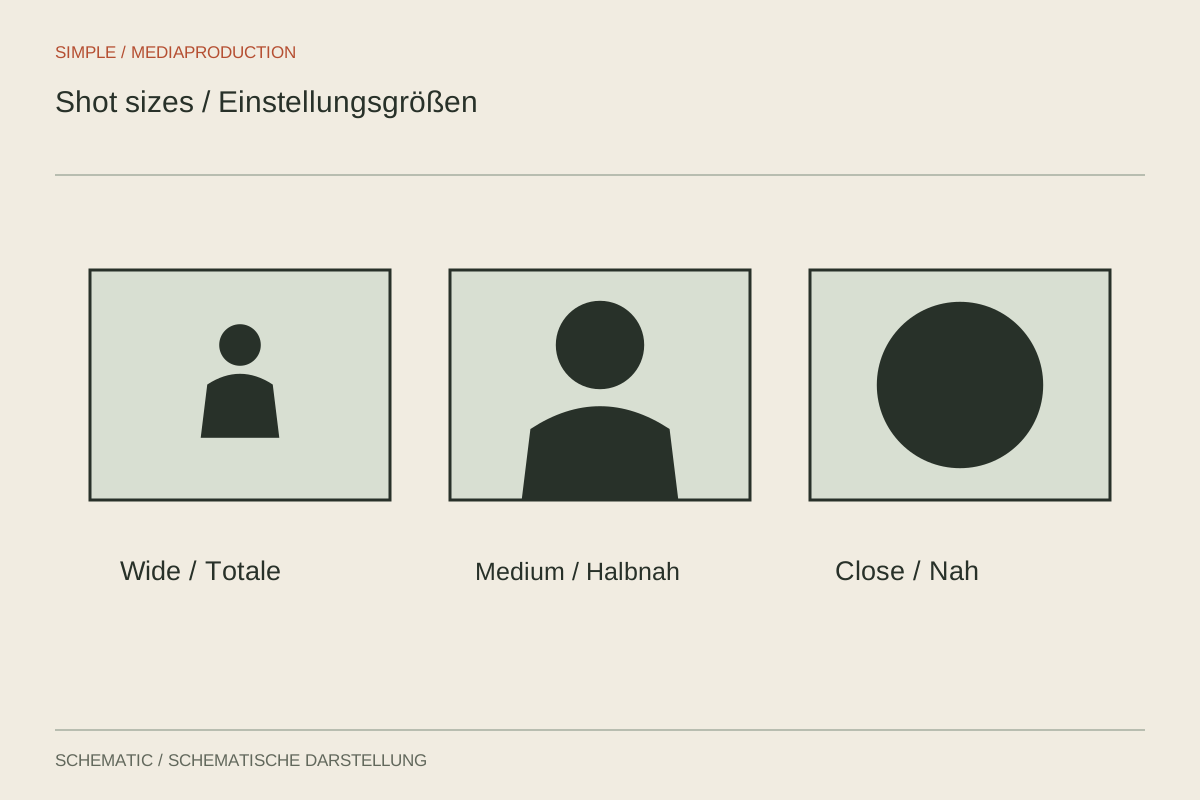
A sequence is more than an alternation between wide and close views. Each shot size answers a different question. Where does the action happen? Who performs it? Which detail determines the result? Distributing those questions deliberately can make a short sequence clearer than one long recording in which viewers must search for the important information themselves.
Move from orientation to detail
A wide view establishes spatial relationships, such as person, table and machine. A medium view connects face and hands. A close shot can explain the small switch or exact tool position. That order is a possible starting point, not a requirement. A film can begin with an intriguing detail if the necessary orientation follows soon enough.
In a tutorial, proximity should match the difficulty. A large lever may not need an extreme close-up; a tiny connector might. Check recognition on the intended screen. A view that appears obvious on a large editing monitor may provide too little information on a phone. The chosen size should support the real viewing situation, not only the production display.
Make different views meaningfully different
Two almost identical compositions can look like a small jump when cut together. Change size or angle sufficiently when a clear perspective change is intended. At the same time, action direction and the object's state must remain intelligible. A very close shot does not automatically solve spatial context; viewers still need a sense of where that detail belongs.
For repeatable actions, plan matching starting and ending states across variants. If a hand enters from the left in the wider shot, it should not inexplicably enter from the right in the following detail. Note the action and watch the views consecutively. Attractive individual images do not prove that they connect into a coherent sequence.
Do not force every available size
A simple button press may be fully explained with a medium view and a detail. Another wide shot is needed only if it adds a missing relationship. Conversely, a complicated spatial arrangement may need more orientation. The number of setups should follow the information required rather than a checklist of every conventional shot size.
Leave time before and after the decisive moment in important actions. This allows the editor to change views at an intelligible point. Finally, compare the planned sequence with the files actually recorded: are place, action and outcome clear, or is the missing shot precisely the one needed to connect two otherwise good pictures?