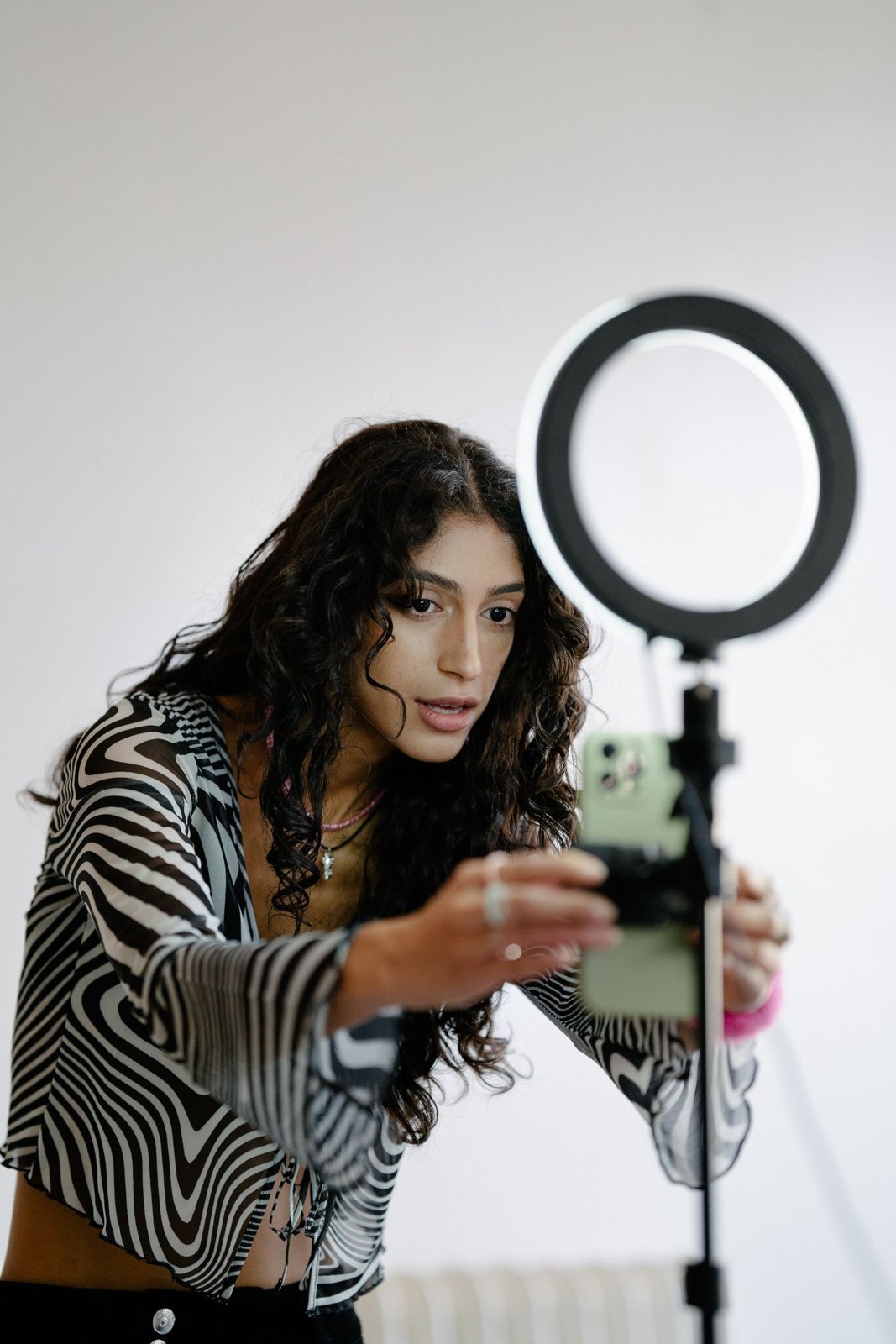
Speaking to camera alone means managing both content and equipment. The fewer adjustments you need during a take, the easier it becomes to address the viewer. A fixed setup, a short test and manageable sections of speech usually help more than numerous changing camera positions.
Prepare your position
Arrange the camera and seat so you can comfortably speak towards the lens. Mark your position if you need to stand up between takes. Check framing with your actual posture, not just an empty chair. Hand gestures and a slight forward lean should still fit sensibly within the image.
Set the lighting and consider whether it will change during recording. A window can provide pleasing light, but passing clouds alter brightness. Choose controllable conditions if consistency matters. Avoid a background whose small distractions continually compete with the face.
Test with real speech
Record several sentences at the intended speaking volume. Play the file back and inspect focus, sound, eye direction and framing. A moving level meter alone does not prove that the intended microphone was recorded. Listen for fans, clothing and desk noises that occur while you speak.
Place prompts close to the lens direction where possible. A lengthy script beside the camera can make eye movement conspicuous. If reading, practise short units of meaning and pause between them. The recording does not need to happen in one flawless continuous performance.
Speak in editable sections
After a mistake, restart the complete thought rather than beginning halfway through a word. Leave a short quiet moment before restarting. This creates a clear editing boundary. Keep your posture reasonably similar so a later cut is not complicated by a large position change.
Imagine explaining the subject to one person rather than an invisible crowd. Concrete sentences and a clear reason for speaking support the delivery. If a section repeatedly fails, reconsider its wording: it may be too nested or contain more thoughts than can naturally fit into one breath.
Inspect the recording again after a few takes. That catches a depleted battery, displaced microphone or lighting change before the entire script is finished. Keep brief notes identifying successful sections so the edit does not begin with searching through every repetition from scratch.