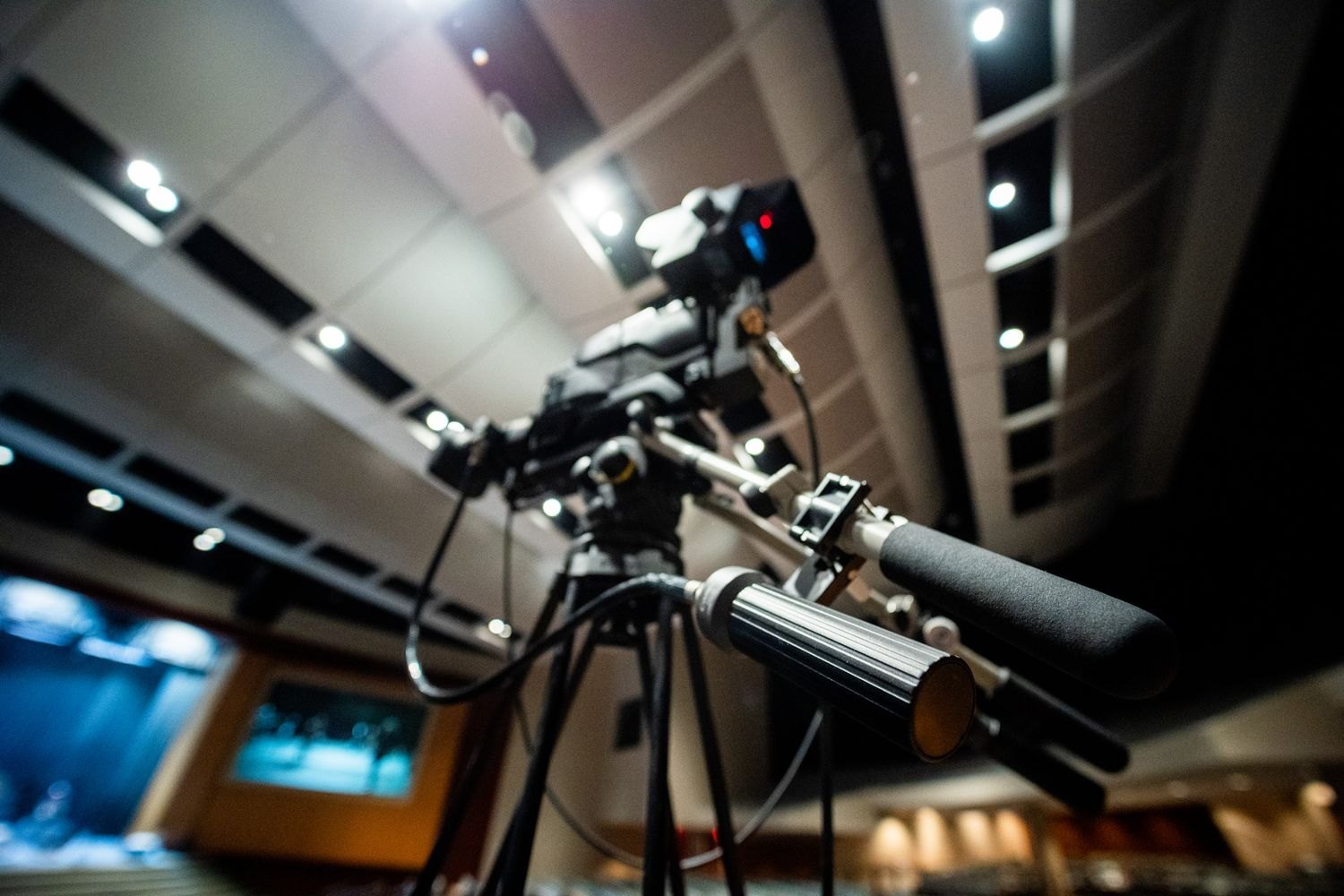
During a pan, the camera stays in one place and rotates around its axis. That sounds simple, but a jerky start or searching finish is conspicuous in the final film. Plan the two settled compositions as well as the movement between them. A pan should reveal a spatial relationship or follow an action, rather than merely sweep across whatever space is available.
Set up the ending first
Choose the final composition and stand where you can reach it comfortably. Then turn back to the starting position. This avoids finishing with twisted arms and an awkward stop. Check the whole path for cable tension, obstacles and objects entering unintentionally. You should be able to perform the movement smoothly before recording starts.
Level the tripod if the horizon needs to remain straight through the pan. A tilted system can introduce a visible lean as it rotates. Use the head's intended pan handle and suitable drag. Excessive resistance can cause a sudden breakaway; too little makes controlled braking harder. The exact adjustment depends on the head, so distinguish its movement drag from a locking control.
Judge speed in the recorded picture
A longer focal length magnifies small movements and makes uneven panning more obvious. A lower frame rate and short shutter duration can also make movement appear harsher. Record a test with the actual lens and intended settings. Watching only the live view is not enough to assess the complete playback result.
Begin calmly, accelerate deliberately and ease into the final frame. A consciously steady middle section is easier to assess than continuous small corrections. If lines appear to judder during playback, try a slower move or shorter path. Not every subject needs one uninterrupted pan; two static shots may explain the space just as clearly without drawing attention to camera movement.
Hold still for the edit
Keep recording after reaching the final composition and hold the camera genuinely still. Do the same before starting. Those settled sections give the editor options and avoid forcing every cut into an acceleration or deceleration. They also make it easier to compare whether the beginning and ending compositions both contribute useful information.
Check stabilisation in the lens or camera body as well. Some systems recognise pans; others may counteract the start or finish undesirably. Consult the manufacturer's guidance and compare a short test. A blanket rule to always enable or disable stabilisation on a tripod does not fit every device or stabilisation mode.