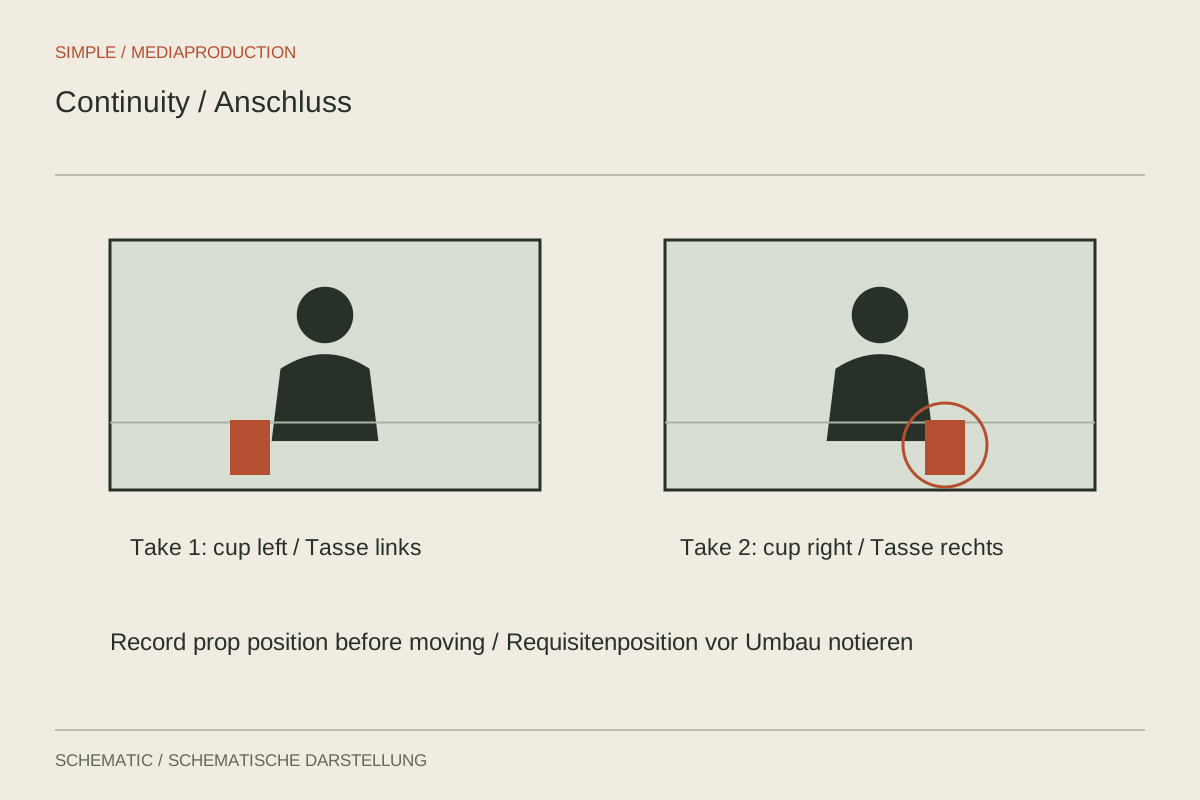
A cup appears on the left in the wide shot and suddenly on the right in the detail. Such jumps are easy to create when shots are filmed out of their eventual order. Brief continuity notes help restore important states. They need not catalogue every object in the room. Concentrate on changes viewers would interpret as an interruption within the same action.
Record the starting state before the first take
Photograph the relevant tabletop, clothing and body position from a useful angle. Also note which hand holds an object and how far an activity has progressed. A photograph may show a fill level without revealing whether the person is beginning or finishing. Add that timing information in a short sentence beside the image.
For a demonstration, the condition of the workpiece matters especially. A tightened screw may be loosened for an earlier close-up; cut fabric cannot be restored so easily. Plan irreversible steps with spare materials or sufficient camera coverage. The notes should influence the order before a problem occurs, rather than merely explain afterwards why an essential view is missing.
Record changes that affect the edit
Track seating position, eyelines, props and recurring gestures. An insignificant object in a blurred background needs less attention than glasses put on between two lines. Explain these priorities to the contributor so necessary repeats make sense and do not feel like arbitrary corrections. A simple reason also makes it easier for them to reproduce the action comfortably.
Link notes to take or file numbers. “Good answer, picks up cup at the end” gives the editor something specific to use. Mark deliberate changes too. A later shot may represent another time, in which case a changed state is not an error. What matters is the temporal relationship the finished sequence claims, rather than absolute sameness across every recording.
Capture a transition when necessary
Sometimes a state cannot be repeated exactly. A neutral wide view, an appropriate reaction or a detail of the result may permit a transition if it remains truthful. Do not use a cutaway to hide a materially incorrect process. An assembly tutorial still needs to preserve the real sequence even when the camera angles were recorded in a different order.
Before changing angle, check the few critical points together. A short reset is usually easier than a complicated repair in editing. Store the continuity record with the footage notes so the editor understands the same relationships the crew knew on the day, including which differences were intentional and which takes match.