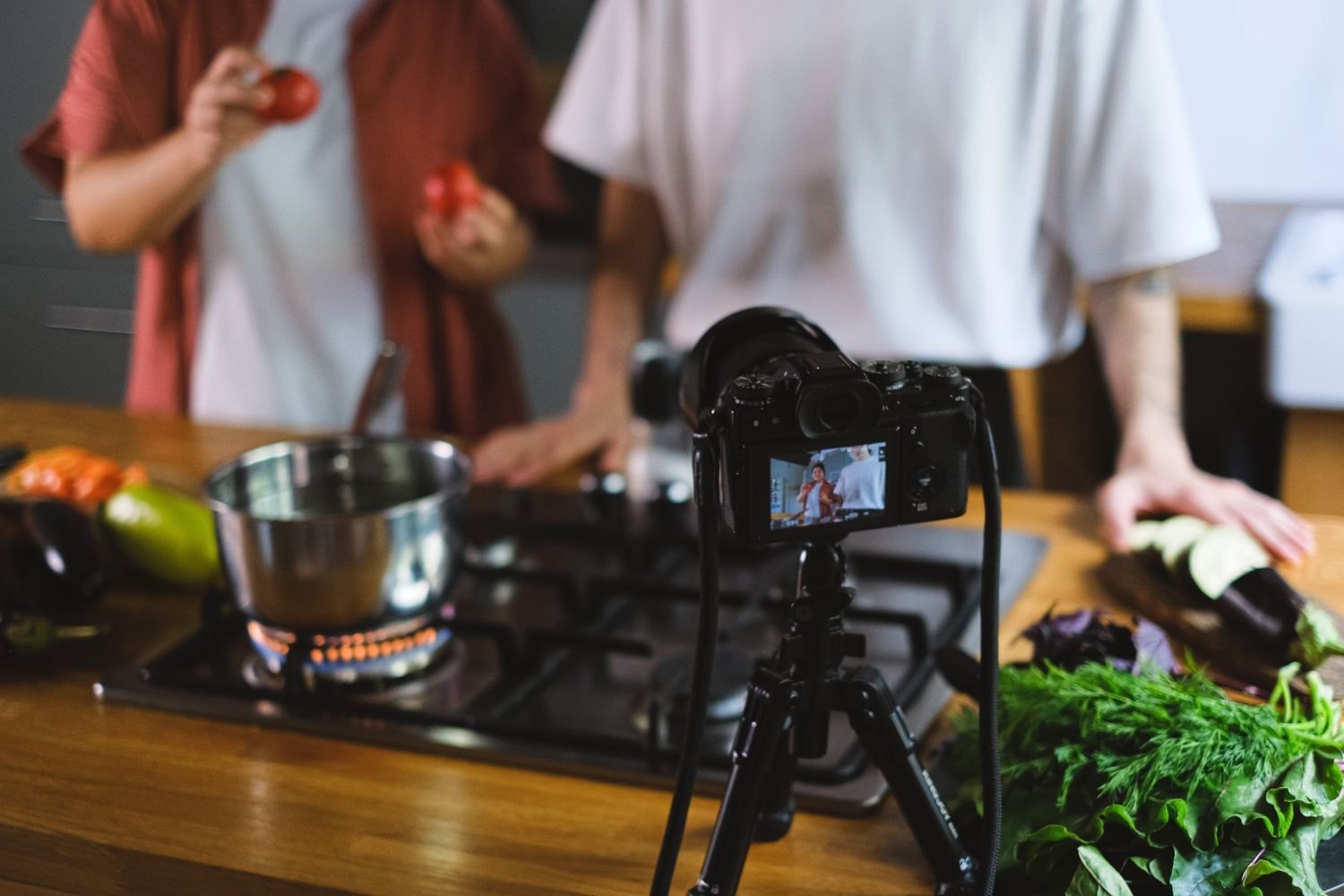
A cooking shot often needs to explain a state: how thick a batter is, how a sauce changes or how a mixture is folded. An attractive finished dish does not answer those questions. Decide which movement or change viewers actually need to recognise in each filmed step.
Prepare for the important moment
Arrange ingredients and tools before starting a time-sensitive action. Check the composition with the bowl or pan actually being used. Deep containers can hide the action; another camera angle often helps more than a tighter crop. The preparation itself should remain workable.
If the operation cannot easily be repeated, rehearse the movement without committing to it first. Check the hand's path while pouring, for example. Set focus and light before steam, heat or rapidly changing consistency enters the scene. Keep cables and camera supports clear of real working routes.
Make texture visible
During stirring, show more than a hand moving in circles. Briefly lifting the tool or holding a clear view of the surface can communicate consistency. Choose an angle that reveals the necessary detail without interrupting the process merely for a decorative shot.
Watch reflections on liquids and shiny vessels. Bright glare can obscure useful texture. Adjust the light position or angle before darkening the whole recording. Colours should represent the actual state understandably; a strong creative treatment could misrepresent browning, for example.
Represent time honestly
Long waiting periods can be shortened, but the omission should remain clear. A brief caption or explanation can establish that time passed between two states. Do not join different preparation stages so that a necessary operation appears to disappear.
Capture relevant working sounds where they support the action. Loud clattering close to the microphone can obscure an explanation. Separate narration is often easier to understand; align it later with the actual visible process.
Check continuity between shots: quantity, utensil, container position and ingredient state should fit together. Small differences may be unavoidable, but must not create a misleading instruction. The completed section should show how to recognise the next useful step rather than merely placing movement beside a finished result.