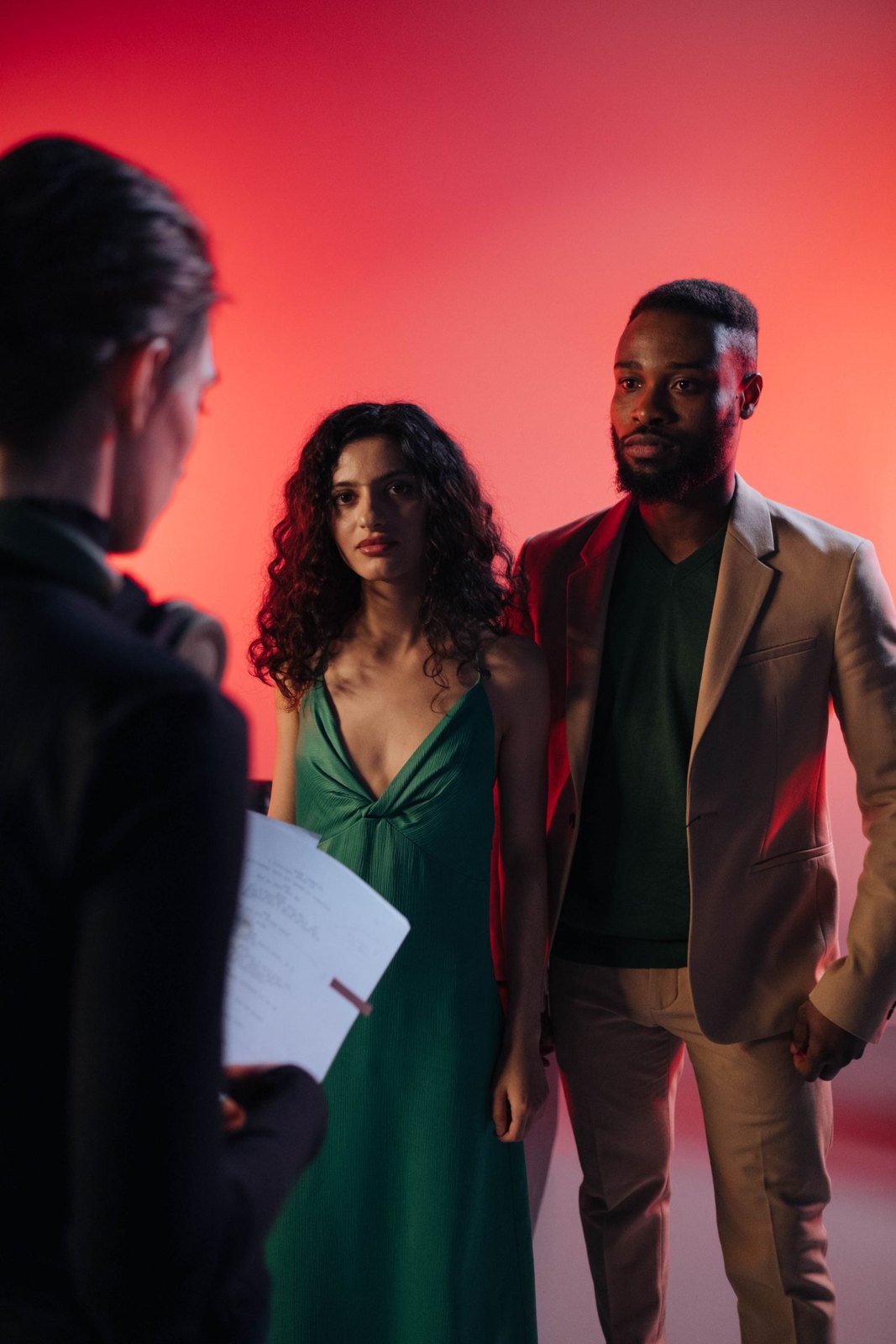
A rehearsal need not run through the entire finished film. Sometimes the first hand movement, a sideways glance and a sentence at normal volume are enough. Its purpose is to expose difficult transitions while changes remain easy. Tell participants what you are checking. Someone who thinks they must deliver the final performance behaves differently from someone taking part in an explicitly technical trial.
Test the hardest moment first
In a demonstration, this might be reaching outside the frame; in an interview, leaning back in the chair. Examine that moment directly. Does the hand remain visible? Does focus hold? Does the microphone cable pull? An easy opening does not prove the whole movement will work. If the critical section fails, simplify the position or action before recording long takes.
Use the real object for the trial. An empty substitute vessel may be held differently from a heavy, full one. Clothing affects movement and sound too. A technical test in a coat tells you little about the later interview without it. Note which conditions already match the recording and which will still change before filming begins.
Align speech with action
Ask a demonstrator to explain a section while performing it. Often the words move faster than the hands, or the reverse happens. Redistribute the explanation: state the objective, show the action, then comment on the result. Extra words are rarely the best solution for a movement that simply needs more time to complete visibly.
An interview rehearsal should not turn the complete answer into a memorised performance. A neutral question about preparation is enough to check volume and eyeline. Save important personal accounts for the actual recording when that helps preserve their natural form. Explain only where to look and how the crew will signal a technical interruption if one becomes necessary.
Make one change per repeat
If the camera, chair and light move together, it becomes difficult to identify what solved the fault. Change something deliberately and repeat the affected section. Afterwards, try a short complete run because a local improvement can create another difficulty elsewhere. For instance, a better hand position may hide a label needed at the end.
Finish with a clear decision: keep the setup, shorten the text or adjust the movement. Mark final positions unobtrusively and record important settings. Then begin the actual take. This makes rehearsal a completed preparation step rather than an ambiguous interval in which nobody knows whether usable material is already being recorded.