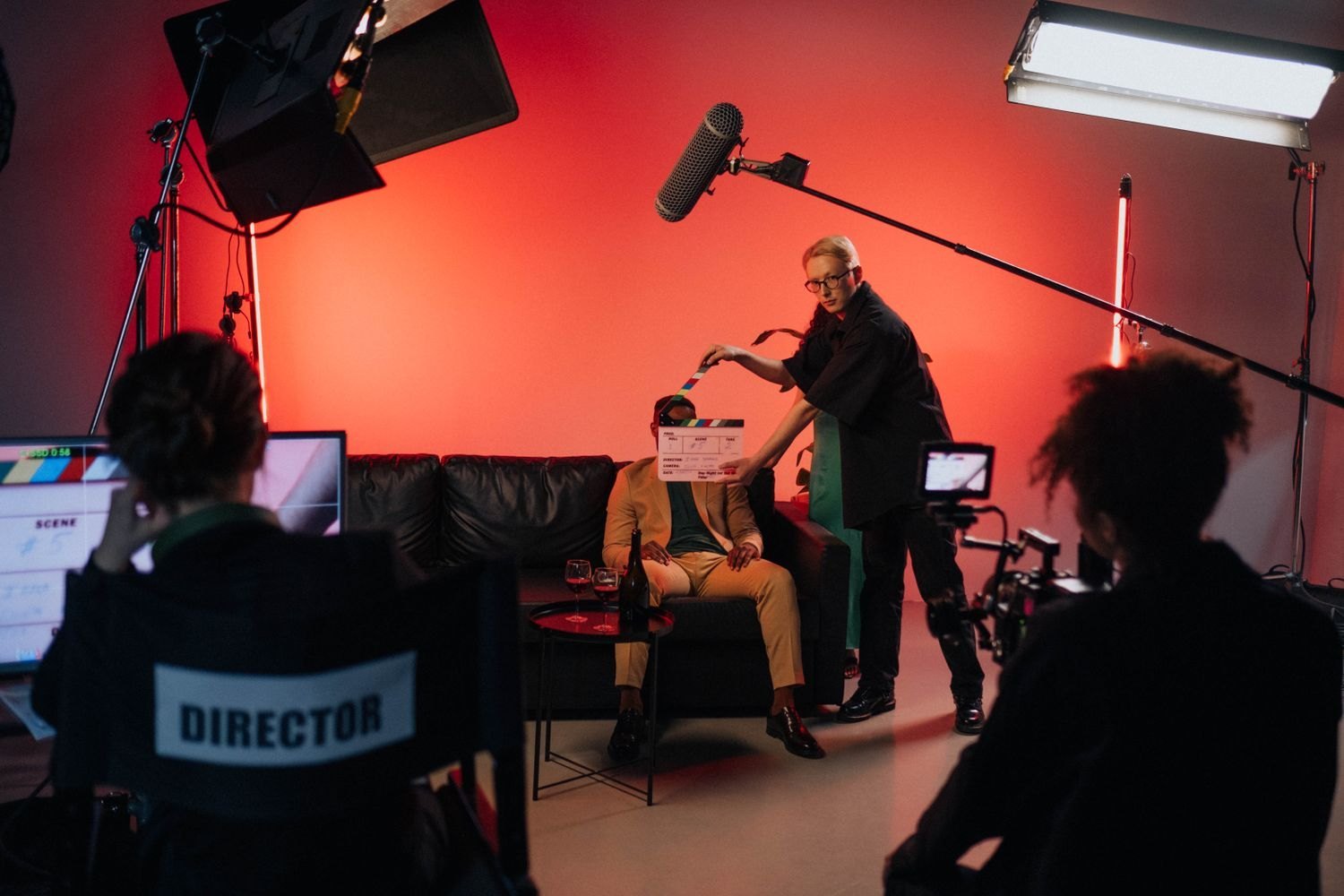
A small crew has fewer people than tasks. That is normal; trouble begins when both assume the other person is monitoring sound or protecting the files. Assign responsibilities before setup. The list need not imitate a large film crew's job titles. It should state who monitors each condition during a particular recording and who can call attention to a problem.
Separate tasks that happen simultaneously
An interview combines framing, focus, sound, conversation and recording status. One person can cover several tasks, but cannot give unlimited attention to all of them at once. A locked camera and a seated speaker may need less visual supervision. A moving, unscripted conversation demands more. Assign roles for the actual scene rather than an imaginary version in which nothing changes.
One possible two-person arrangement gives one person the camera and the other the conversation plus audio monitoring. This works only if the second person can genuinely listen and has a clear way to interrupt for a sound problem. Headphones resting on a table do not provide monitoring. Test the arrangement in rehearsal and simplify the setup if the workload proves unrealistic.
Agree a shared start signal
Before a take, each responsible person should confirm their area is ready. Use short, unambiguous signals. Camera recording, audio recording and contributor readiness are separate conditions. Begin the action only when all are satisfied. With separate devices, a visible and audible synchronisation mark can help where it suits the recording, but it must not interrupt an event that cannot be repeated.
Stopping deserves an agreement too. Everyone should know whether to report a technical problem immediately or allow the current sentence to finish. Continuing may be sensible during a unique event; an early intervention often saves time in a repeatable tutorial. Decide this beforehand rather than trying to interpret improvised gestures while the camera is running.
Make handovers explicit
When someone leaves the room, name who takes over their responsibility. Standing beside the camera does not automatically mean supervising the recording. Memory cards also require an explicit handover: which card is full, which has been copied, and which must not yet be formatted? A simple label can prevent an assumption from becoming lost material.
After the last take, assign one person to confirm the required files while the other dismantles only equipment no longer needed for that check. This avoids both people packing everything away before discovering a missing audio file. The crew remains small, but responsibility stays visible throughout the work.