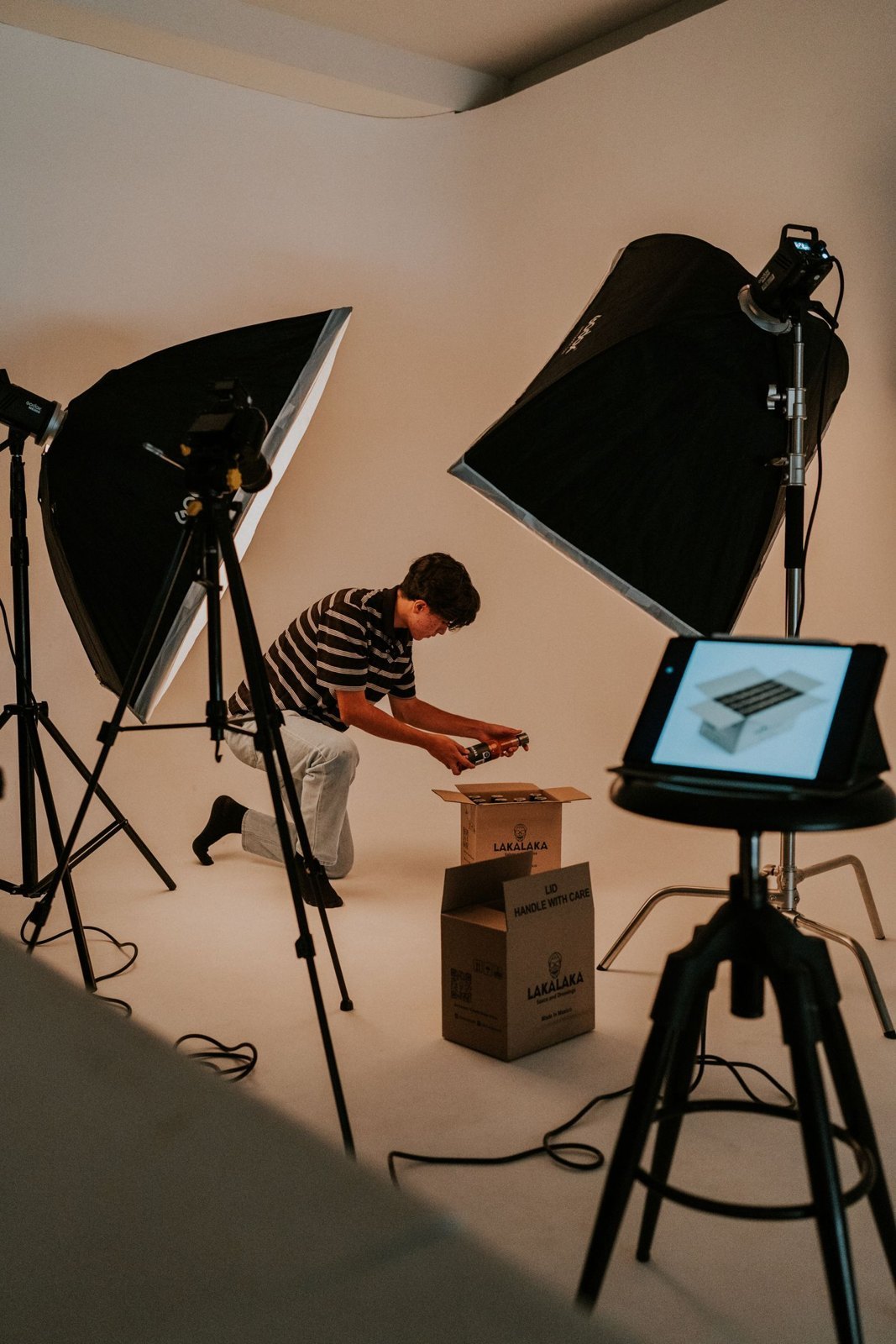
The most useful unboxing information is often straightforward: what is inside the package, how is it arranged, and what needs attention before first use? Build the film around those questions. A long sequence of rustling packaging is not yet a clear introduction to its contents.
Before opening
Prepare picture, sound and lighting before opening a package that is sealed only once. Test the full movement range with the box. Lids and large inserts can obscure the face or the contents. Choose an angle that keeps the important parts visible.
Remove personal address information from view. Provide a place for unpacked items and preserve an understandable order. Plan additional close-ups for small accessories. A tiny connector or adapter does not automatically become recognisable in a wide tabletop shot simply because it is briefly held up.
Establish what the recording can demonstrate. A first impression concerns visible construction, included items and immediate handling. It does not establish durability after months or a systematic performance comparison. Phrase observations accordingly, separating information from documentation from things actually visible in the recording.
Present the contents systematically
Hold each relevant item still briefly and explain its function only where known. If something is unclear, consult the supplied instructions rather than inventing a use. Show relationships too: which connection accepts a cable, and which protective material must be removed for the intended operation?
Shorten pure repetition while retaining orientation. After a substantial cut, viewers should understand where the items now on the table came from. A final overview helps establish the complete contents. Check that the presentation corresponds to the actual product variant being shown.
Watch packaging noise in the recording. Close rustling can overwhelm speech. Record the action first and add explanation afterwards if that communicates more clearly. Narration should describe the real sequence rather than pretend to reproduce a spontaneous reaction that never happened.
Inspect the finished film for readable labels, complete contents and clear limits to its claims. If a later functional test follows, identify it as a separate stage. This keeps clear what unpacking already demonstrates and which properties require further use before they can be assessed.