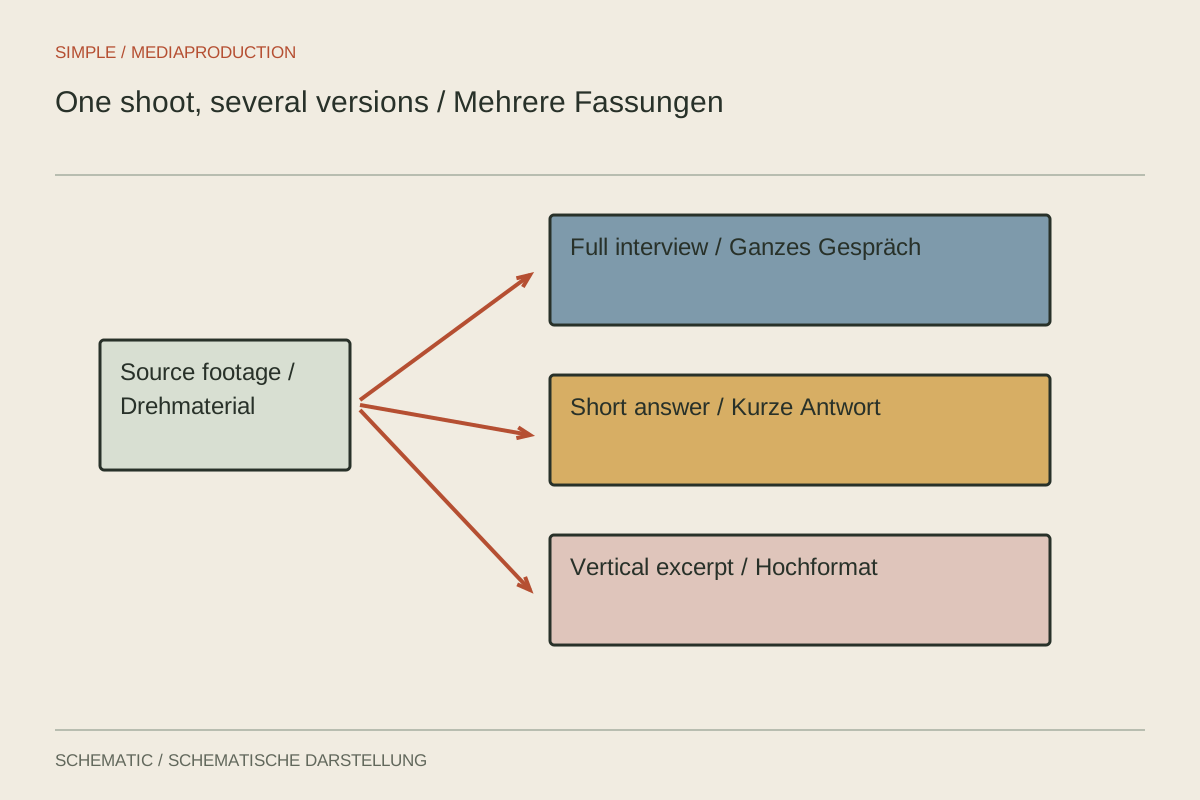
One shoot can supply a main film, a short extract and a vertical version. This works best when those outputs are identified before recording. A later edit can use only information that exists in the material. If the short piece needs its own opening, discover that before the set has been dismantled rather than during final delivery.
Give each version a job
Record the audience, duration, format and message for every output. The main film might explain the whole process while the short piece answers one common question. They can share detail shots without sharing the first sentence. “As mentioned earlier” is unsuitable for a standalone extract even when it makes perfect sense within the longer film.
Mark complete units of meaning in the script. They need not have identical lengths. What matters is that each beginning and ending connect intelligibly without a missing prerequisite. A shortened tutorial must not imply an omitted preparation step is unnecessary. Point to the complete explanation where needed, and ensure the short version still communicates its own limited purpose clearly.
Record shared material deliberately
Plan neutral details, outcomes and transitions that can support several versions. Check the boundaries for different aspect ratios at the same time. A wide two-person conversation cannot simply be squeezed into a narrow crop. It may require another single-person angle. Such additions are often easier at the original location than during a separate pickup session later.
Record alternative opening and closing lines separately when required. Leave clear pauses between them and note their intended use. A file label or take note such as “short opening, vertical” prevents later guessing. Multiple languages also affect names, displayed terminology and screen text, not only the spoken audio track, so identify those dependencies before recording fixed text in the picture.
Track changes across versions
Maintain a simple version list with the editing and review status of each output. A factual correction in the main film may need to reach every derivative. A changed cut point might affect only one short version. Mark the distinction so an obsolete statement is not accidentally delivered in an otherwise newer set of files.
Review every completed version independently from beginning to end. Shared source material does not guarantee shared accuracy. A new crop may obscure captions, a shortened passage may lose the reference of a sentence, and another export may alter audio. Only checking the complete individual output confirms that one shoot has produced several understandable films rather than several technically different files.