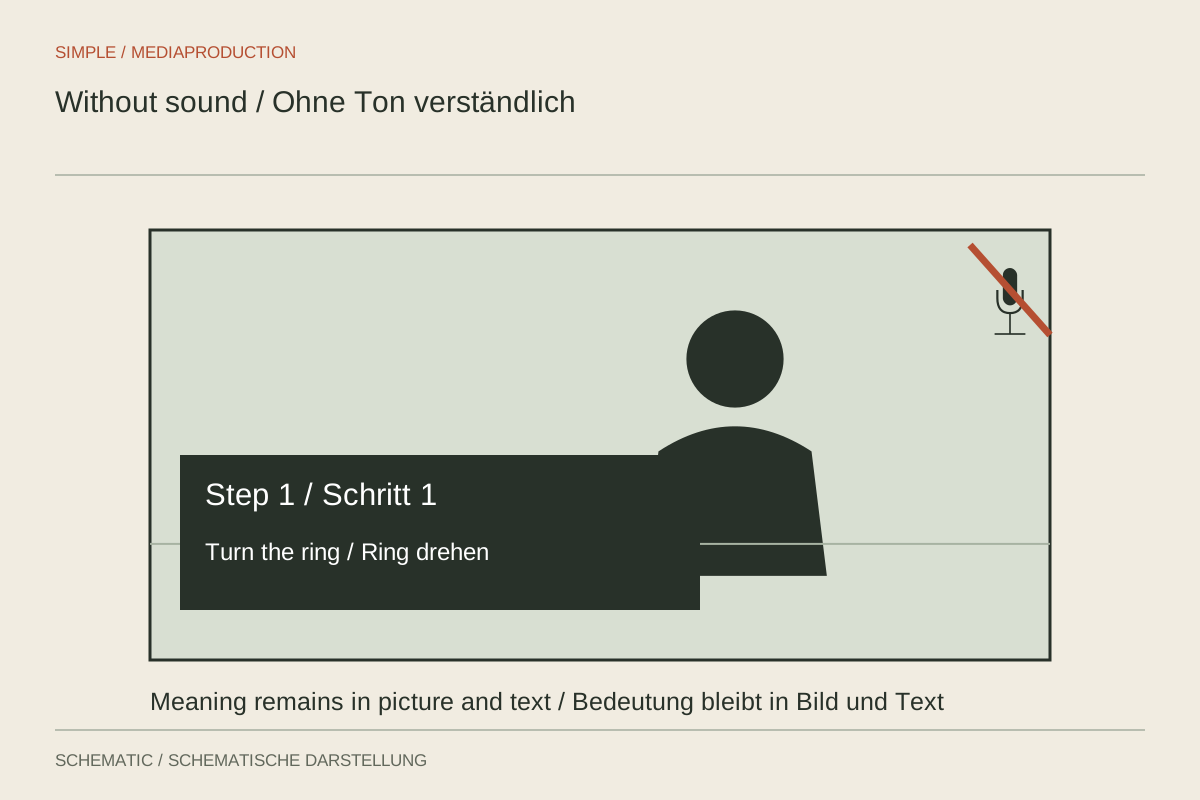
A silently viewed video needs visible orientation. Captions help with speech, but do not automatically solve every comprehension problem. An alarm, an off-screen confirmation or a change explained only through sound may still be missing. Check the whole meaning rather than spoken wording alone.
Test the message without speakers
Watch an early edit completely muted. Note which information becomes unclear. Who is acting, what problem is shown, and how is the result recognised? A statement present only in narration may need a relevant image or a short written explanation.
Use text where it adds information. A screen full of sentences competes with the action. Divide longer explanations into manageable sections and allow enough reading time. Avoid introducing a decisive movement precisely when viewers need to read a lengthy overlay.
Include more than spoken words
Captions should communicate important non-speech audio information where it contributes to the content. A brief indication of a signal sound may explain why someone reacts. Decorative music does not necessarily need the same detail as a sound that triggers the action.
Use clear visual changes of state. In a tutorial, an unmistakable completed result can explain more than an arrow labelled “Done.” Colour alone may not sufficiently distinguish states; add wording or shapes where useful. Check that elements remain distinguishable on a small display.
Silent comprehension is not complete accessibility
A video made entirely of images and text still presents barriers to people who cannot perceive that visual information. Depending on the content, spoken description or a descriptive transcript can add another route. Silent usability is therefore a specific design objective, not a blanket proof of accessibility.
If offering both a sound version and one understandable silently, keep their statements consistent. A brief on-screen message must not contradict the narration or omit important conditions. Picture and speech should complement one another without giving one audience substantially different information.
Check the final export with sound and muted. Examine caption position, contrast, reading duration and the timing of important actions. If test viewers understand only by guessing, a visible piece of information is probably missing. Fill that particular gap rather than simply adding more text to every shot.