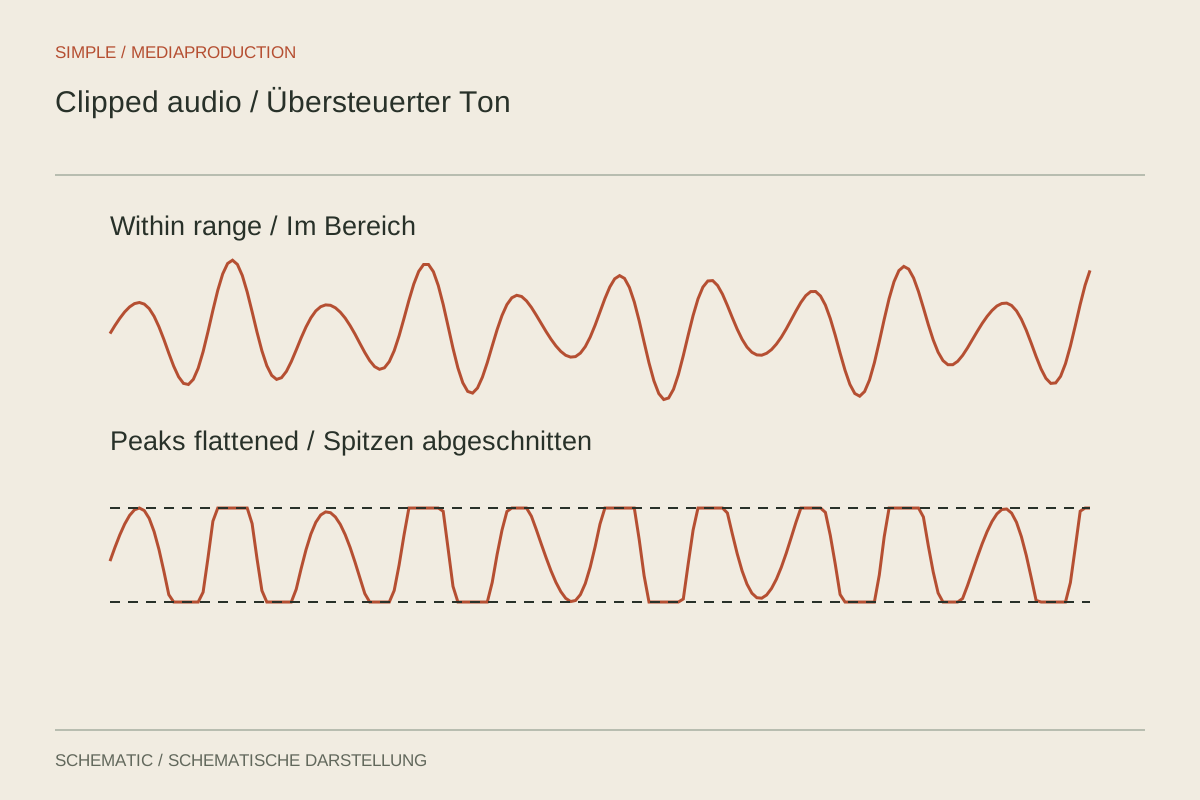
A voice may sound rough on loud syllables even though the finished file remains well below maximum level. This can be overload that occurred earlier. Once an input fails to represent the waveform correctly, turning it down afterwards only makes the fault quieter. Investigate the original recording and the path from microphone to file.
Combine listening with visual inspection
Find a clearly affected moment and compare it with a quieter passage. Clipping may sound harsh and scratchy. A flattened waveform is one possible clue, but not every fault is visible in a small overview. Conversely, an unusual shape alone does not establish the cause.
Check whether the file was subsequently normalised or reduced in level. Its current peak then says little about the original input. Open the untouched source where possible. Determine whether only one channel or several distort simultaneously.
Find the first overloaded stage
With a wireless microphone, distortion may occur in the transmitter before the signal reaches the camera. With an interface, a strong line output connected to a microphone input may cause trouble. Check connection types and intended levels in device documentation. Correctly setting the last control does not repair an unsuitable combination earlier in the chain.
Record a fresh test with reduced level at the suspected early stage. Keep distance and delivery similar. If speech becomes clean while the later output can be raised appropriately, the cause is better isolated. Avoid changing every control and microphone position simultaneously.
Decide between repair and a retake
Specialised repair may make lightly damaged peaks less noticeable. It cannot reliably reconstruct every lost detail. Listen to processed consonants and loud vowels within the sentence. A smoother waveform is insufficient proof of intelligible speech.
For a short important sentence, repeating it is often preferable. With unrepeatable statements, check alternative microphone tracks or a cleaner take. Preserve the damaged original unchanged and document the replacement source used. Before the next conversation, include an emphatic speech test with genuine recording headroom.