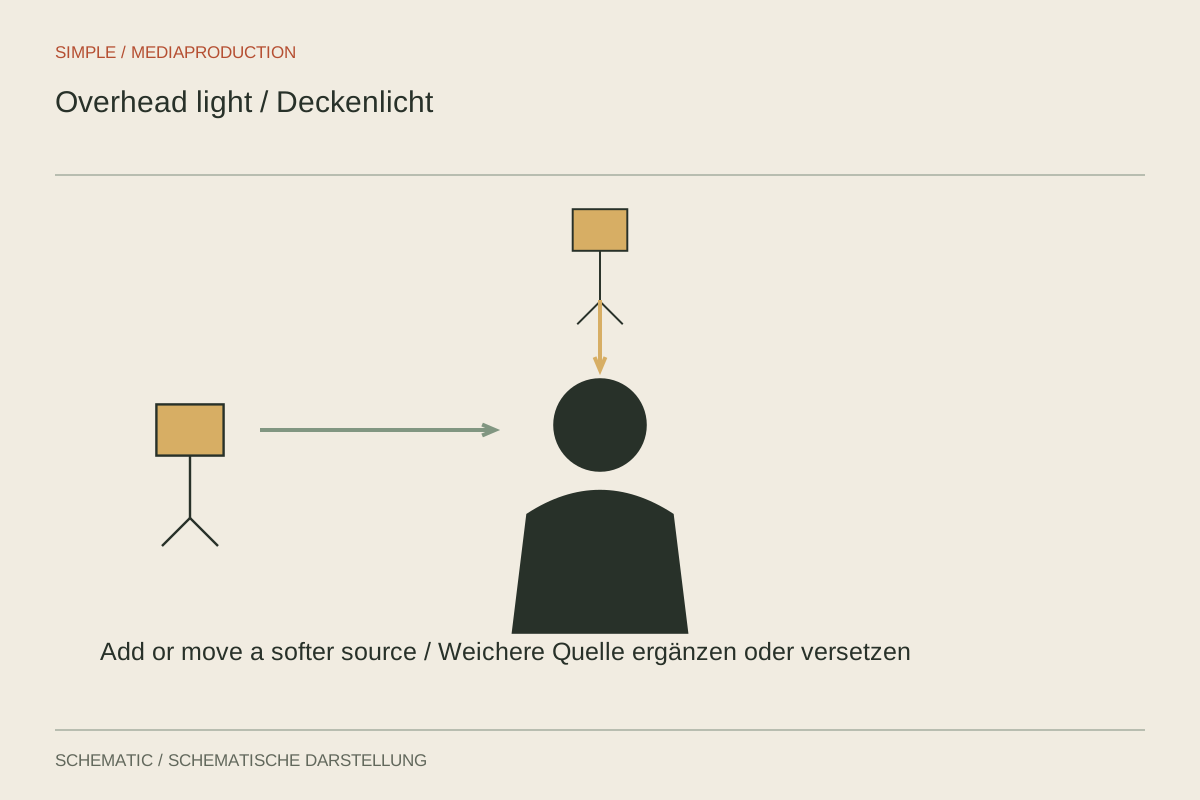
Meeting-room tables are often placed directly beneath a ceiling fixture. This works for an in-person conversation, but video may show dark eye sockets and a bright bridge of the nose. Switching on another lamp at random will not necessarily improve those shadows. First investigate whether the speaker must sit beneath the strongest pool of light.
Try moving half a step
Move the chair slightly forward or sideways and compare the face in the camera image. A less steep lighting angle can make the eyes more visible. Check the background and eyeline towards the interviewer at the same time. A favourable lighting angle contributes little if the speaker must awkwardly look around the lens.
If the relevant ceiling fixture can be switched off independently, compare a recording without it. This may darken the background or reveal a different colour cast. A room can contain several separate lighting zones. Ask how the installation is intended to be controlled rather than altering fixed equipment.
Add frontal light in moderation
A soft source from the front and slightly to one side can lift the eye area. Set its output so it meaningfully shapes the face. If the overhead light remains much stronger, the addition may merely create reflections while the deep shadows still dominate. Assess forehead and cheeks together instead of considering only the darkest patch.
A white reflector can return existing light when positioned appropriately. Below the face, it should not become so strong that illumination appears to come unnaturally from underneath. Compare calmly with and without it. A pale tabletop may already be creating this effect unintentionally.
Remember sound and movement
In an interview, the revised arrangement must not obstruct the microphone or restrict the hands. Ask for a short answer with normal gestures. Watch whether leaning forward suddenly throws a shadow across the eyes or makes glasses reflect the added fixture.
If the room offers no workable angle, another position in the building may be simpler than adding increasingly elaborate corrective lighting. Document the chosen spot with a short test clip. A reasonably consistent face during natural movement matters more than one perfect still frame in an uncomfortable posture.