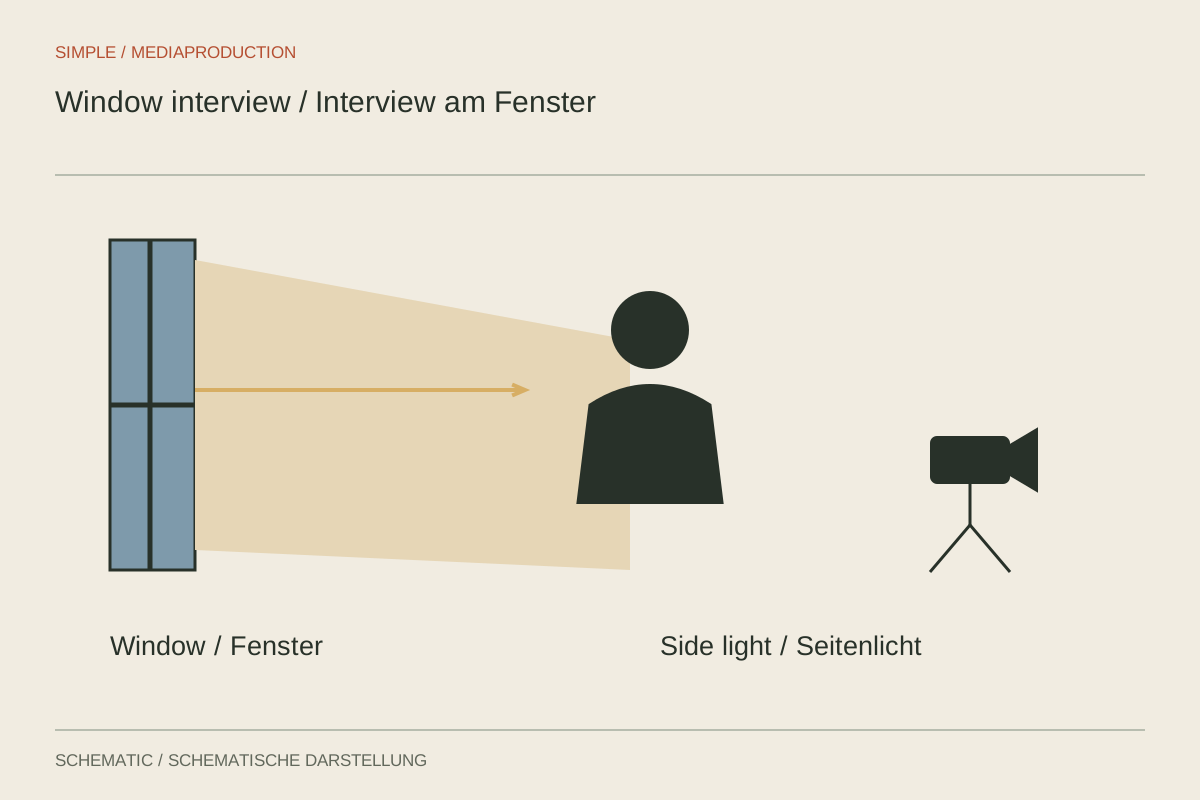
A window is a large available light source, but not a regulated lamp. Weather, sun position, glass and surfaces outside affect its appearance. It can nevertheless provide a useful basis for a small interview. First find a position with workable sound and sufficient space; then arrange the person so the window lights them coherently without forcing an excessively bright background into the composition.
Start side-on and watch the face
Place the person beside the window and turn them gradually while looking through the camera. Observe eyes, nose and the side facing away from the window. The suitable position depends on window size, distance and eyeline. A fixed angle is less useful than checking whether the eyes remain visible and the shadows support the intended appearance.
Closer to the window, the source may appear larger relative to the person while illumination falls away more strongly into the room. Farther away, the relationship with wall reflections and background changes. Inspect the whole frame. If the person sits too dark against a bright exterior, another camera direction may work better than insisting on that particular background.
Identify direct sun and mixed colour
A bright window does not automatically provide soft light. Direct sunshine can cast sharply defined patches across the face or clothing. Consider whether those patches may move during the planned conversation. Suitable existing shading or another position can help. Do not attach improvised materials where they could fall or interfere with the building's normal operation.
Switch unnecessary interior lamps off only with permission and compare the colour. Warm overhead light may colour the shadow side differently from the window-lit side. White balance cannot fully correct this local mixture. Decide which sources are needed before finalising the camera settings, rather than trying to repair every lighting disagreement with a colour-temperature slider.
Adjust contrast with simple surfaces
A bright surface on the shadow side can return light and reduce the difference. A dark surface can reduce existing reflections. Neither needs to appear in frame, but both require secure placement. Compare the effect with and without the surface while keeping exposure unchanged so the difference is easy to judge.
Record a longer trial and watch for cloud-driven changes on the face. For a very long conversation, controllable artificial lighting may be more suitable. Note the time and position if pickups will be needed. A window cannot be restored as precisely as a saved dimmer value, even when the chair and camera return to their marks.