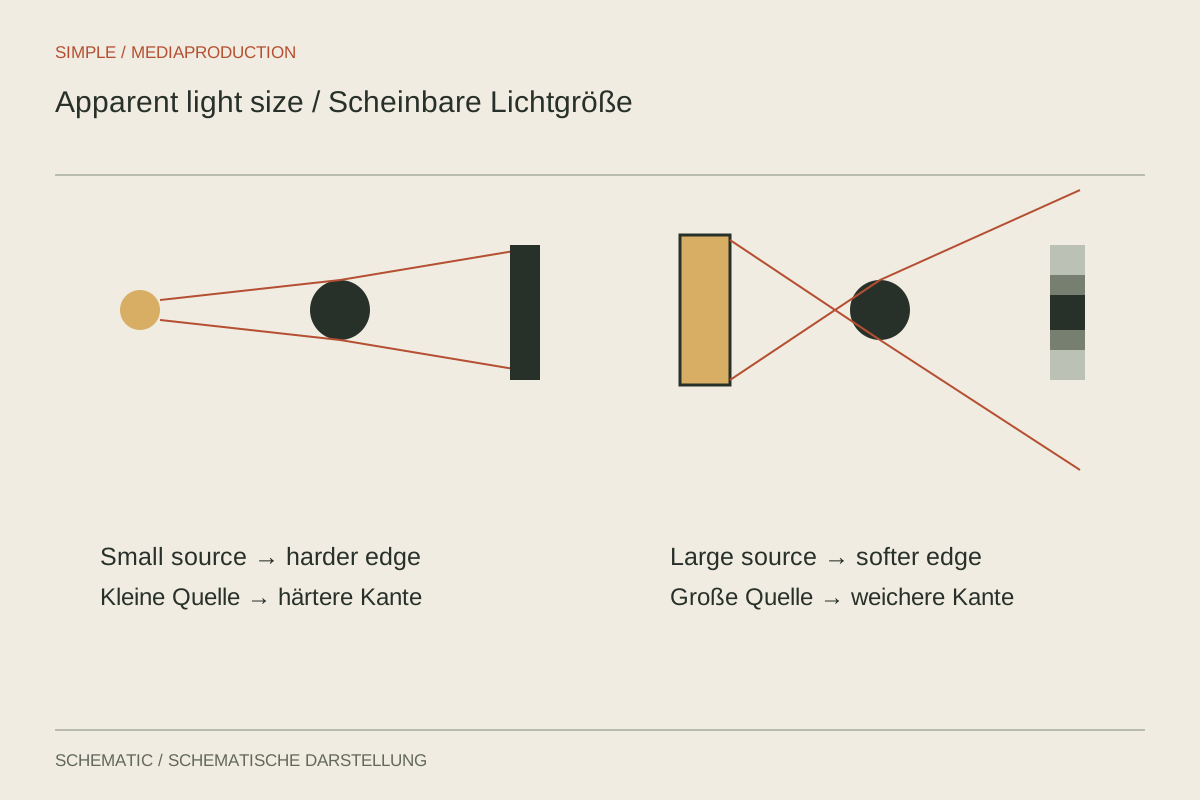
A very bright lamp can produce soft light, while a dim one can produce hard light. The terms do not simply describe intensity; they concern how sharply or gradually shadows are bounded. One important factor is the source's apparent size from the subject's position. Understanding that distinction helps you change light deliberately instead of merely lowering a dimmer when you want softer shadows.
Compare shadows on a simple object
Place a clearly shaped object in front of a surface and illuminate it from a consistent direction. Compare a small source with a larger effective emitting area. Observe the transition at the shadow edge. A larger apparent source usually broadens that transition because light reaches the edge from several directions across the source's area.
Distance changes apparent size. A large surface far away can appear relatively small; a smaller surface close to the subject can appear relatively large. Distance also changes brightness distribution in the room. When moving the source, inspect both the shadow edge and exposure. A comparison with very different image brightness can obscure the lighting-quality difference you intended to assess.
Diffusion needs an illuminated area
Diffusion material acts as a new emitting surface where the light actually fills it. A tiny piece immediately in front of a small source does not automatically turn that source into a large window. Check the illuminated area and its distance from the subject. Use suitable, securely mounted materials and respect the fixture's heat output and clearance requirements.
A lit bright wall can also form a broad source, but its colour affects the returning light. A warm wall may tint skin differently from a neutral surface. Inspect colour and direction together. Soft shadows alone do not guarantee appropriate colour reproduction or enough brightness separation from the background.
Choose according to the information
Hard light can reveal fine surface texture and clearly defined shapes. On a glossy product it may also create troublesome reflections. Soft light can accommodate facial movement more evenly, while making some textures less obvious. Both properties are tools rather than positions in an automatic quality ranking.
Watch the subject moving from the intended camera position. Decide which details must remain visible and which shadows explain form. If the image looks flat, excessive fill may be responsible even though the shadow edge is already appropriately soft. Adjust contrast deliberately in that case instead of rebuilding the entire light quality without identifying the real cause.