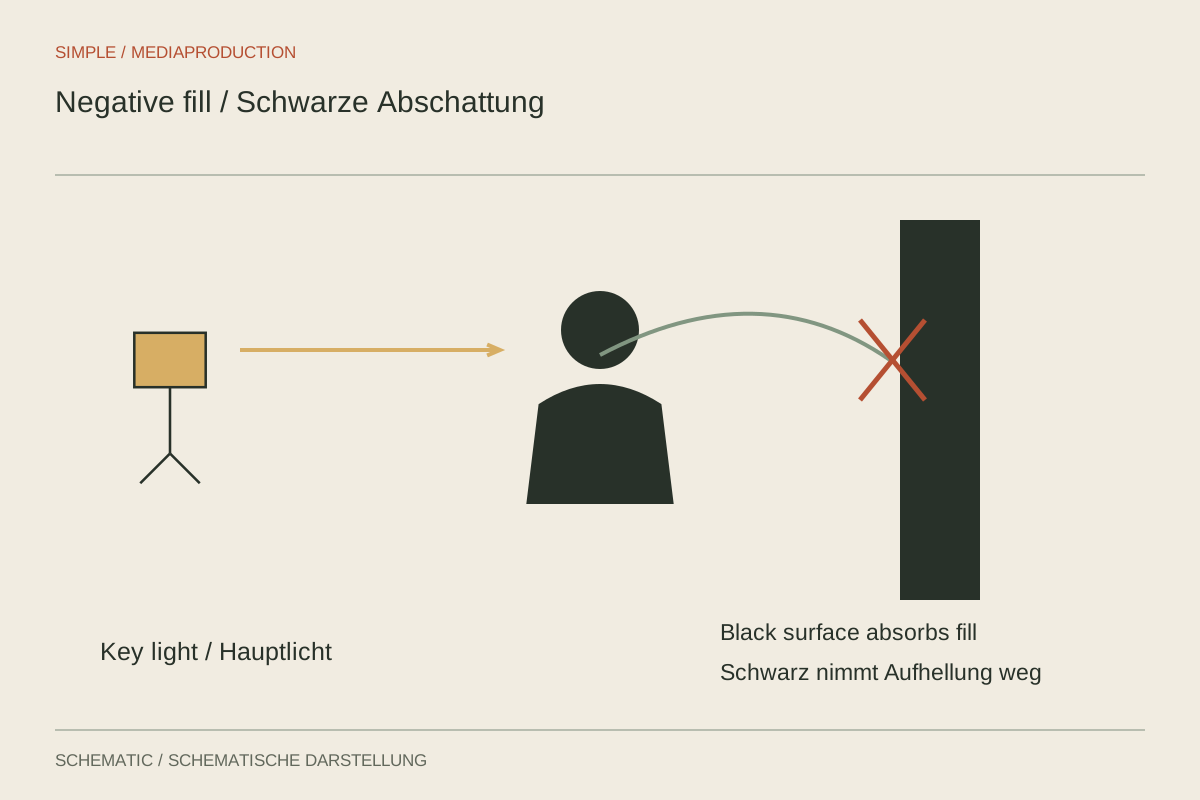
In a bright room, light returns from walls, floors and furniture. A face may consequently appear similarly bright on both sides even with a side-positioned key light. Negative fill reduces some of that returning light with a dark surface. It does not create black light. It replaces a bright reflective environment from particular directions with something less reflective.
Identify the existing reflections first
Remove unnecessary additional fill and observe the shadow side. Carefully move a suitable matte black surface closer to that side, outside the frame. Compare with and without it while keeping camera exposure fixed. If that side of the face darkens, you have changed part of the ambient fill rather than simply lowering the entire image exposure.
The effect depends on size, distance and surroundings. A small distant surface may change little, while a larger nearby one may make a substantial difference. Start gently and check the person's movement. A strong result in a static seated pose can become uneven when they lean forward. Placement needs to cover the real conversational movement, not only a single test point.
Reduce fill while preserving the key
Ensure the black surface does not accidentally block the main source. Otherwise, the whole subject may darken instead of gaining controlled shape. Inspect the lit side, eyes and nose shadow after every adjustment. An additional hard-edged shadow may indicate unintended direct shading rather than the reflective-light reduction you wanted.
The background can change too. A surface near a wall may remove light there and create a visible darker region. That may work, but should be deliberate. In a two-camera arrangement, keep the surface outside both compositions. A position invisible in the close view can remain conspicuous in the wide shot, particularly when the contributor moves aside.
Mount securely and judge the whole sequence
Use suitable supports and secure large surfaces against falling. Outdoors they can catch wind; in confined rooms they must not obstruct exits or walking routes. An improvised arrangement someone must hold precariously throughout the interview is not dependable. Include space for the contributor, microphone and camera when choosing its position.
Judge the recorded clip rather than only a dramatic still frame. Does the darker side retain enough readable detail? Does it suit the factual content and the other camera view? If information disappears, increase distance or reduce the surface area. Negative fill is an adjustable correction to existing reflections, not a requirement to make every face as dark and dramatic as possible.