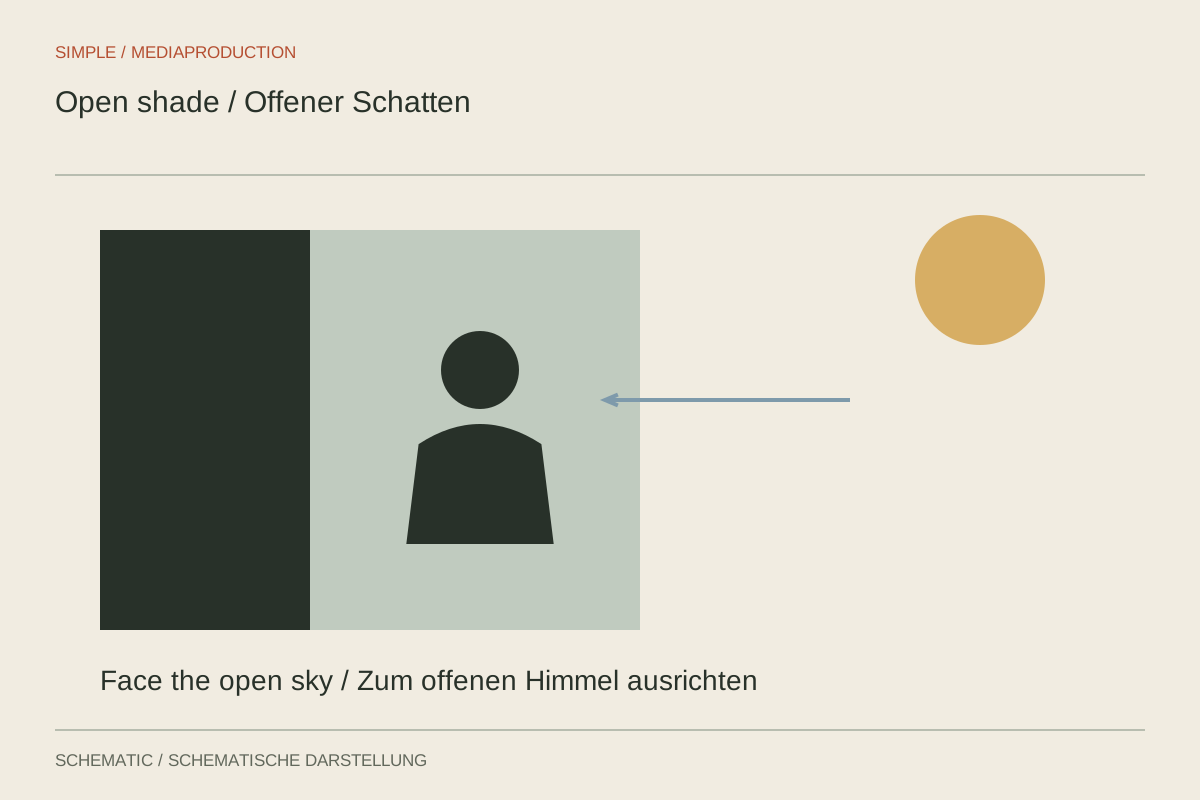
Someone standing beneath a tree is in shade, yet bright patches still move across their forehead and clothing. For an interview, this is harder to use than a consistently sheltered area beside a building. Open shade here means that direct sun does not reach the speaker while a larger bright environment can illuminate them. Look for that combination rather than simply the darkest spot.
Face towards the brighter area
Position the speaker facing an open, bright area without requiring them to look directly into the sun. Turn them gradually and observe the eye area in the camera image. Beneath a deep overhang, light may arrive mainly from above or one side. Moving closer to its edge may make the face more evenly readable.
Check the ground. A broad green lawn or strongly coloured wall can reflect tinted light onto skin and clothing. Neutral paving behaves differently. Moving a few metres may therefore accomplish more than changing white balance. Keep camera settings fixed initially while comparing positions.
Check background and duration
A shaded face against a sunlit white wall can unnecessarily increase the scene's brightness range. Where possible, choose a background whose brightness suits the speaker. A darker area need not be completely uniform, but should not contain isolated extremely bright patches immediately beside the head.
Observe the boundary between sun and shade. A narrow shaded strip may suffice for a brief statement. A longer conversation needs enough margin to prevent moving sunlight reaching the face during a take. Passing pale vehicles can also briefly return light onto the subject.
Record a spoken test
Wind and environmental noise also influence location choice. A visually attractive spot beside a busy road may be unsuitable for intelligible speech. Record several sentences with the intended microphone and listen to the file.
If a reflector is needed, secure it appropriately for the conditions. Large lightweight surfaces respond to wind and must not stand uncontrolled beside the speaker. Finally assess a natural head movement: the chosen shaded position should work throughout the conversation, not only for one exact eyeline.